12 Clever Storage Ideas for Small Homes That Cost Under $25
Small homes do not need more square footage — they need smarter storage. Most small homes have plenty of unused space: the backs of doors, the wall above the sofa, the gap under the bed, the inside of a cabinet door. The trick is spotting it and using it. Every idea in this list costs under $25, needs no tools beyond a drill or a pack of adhesive hooks, and can be done in an afternoon. No remodel, no built-ins, no big spend — just clever storage that makes a small home feel twice as big.
Use the Walls You Already Have
1. Put a shelf above every door
The wall space above a door is wasted in almost every home. A single floating shelf above a bedroom or bathroom door holds books, baskets, towels, or seasonal items that would otherwise eat closet space. A basic 24-inch floating shelf costs $12 to $20 at Walmart or IKEA, installs with two screws, and adds storage without taking a single inch of floor space. Start with the bathroom door — towels and toiletries are the easiest win.
2. Hang a pegboard in the entryway or office
A pegboard turns a blank wall into flexible storage: hooks for keys and bags, small shelves for mail, baskets for sunglasses and dog leads. Move the hooks around whenever your needs change — that is the whole point. A small pegboard kit costs around $15 to $20, and it keeps the daily clutter off your counters and tables, where it always seems to pile up.
3. Add picture ledges for books and small things
Narrow picture ledges — the kind sold for displaying photos — make perfect shallow shelves for paperbacks, spice jars, kids’ books, or plants. They stick out only a few inches, so they work in hallways and beside beds where a deep shelf would be in the way. Two ledges cost about $15, and a row of them turns a bare hallway wall into a mini library.
Use Doors, Corners, and Dead Space
4. Hang an over-the-door organiser everywhere
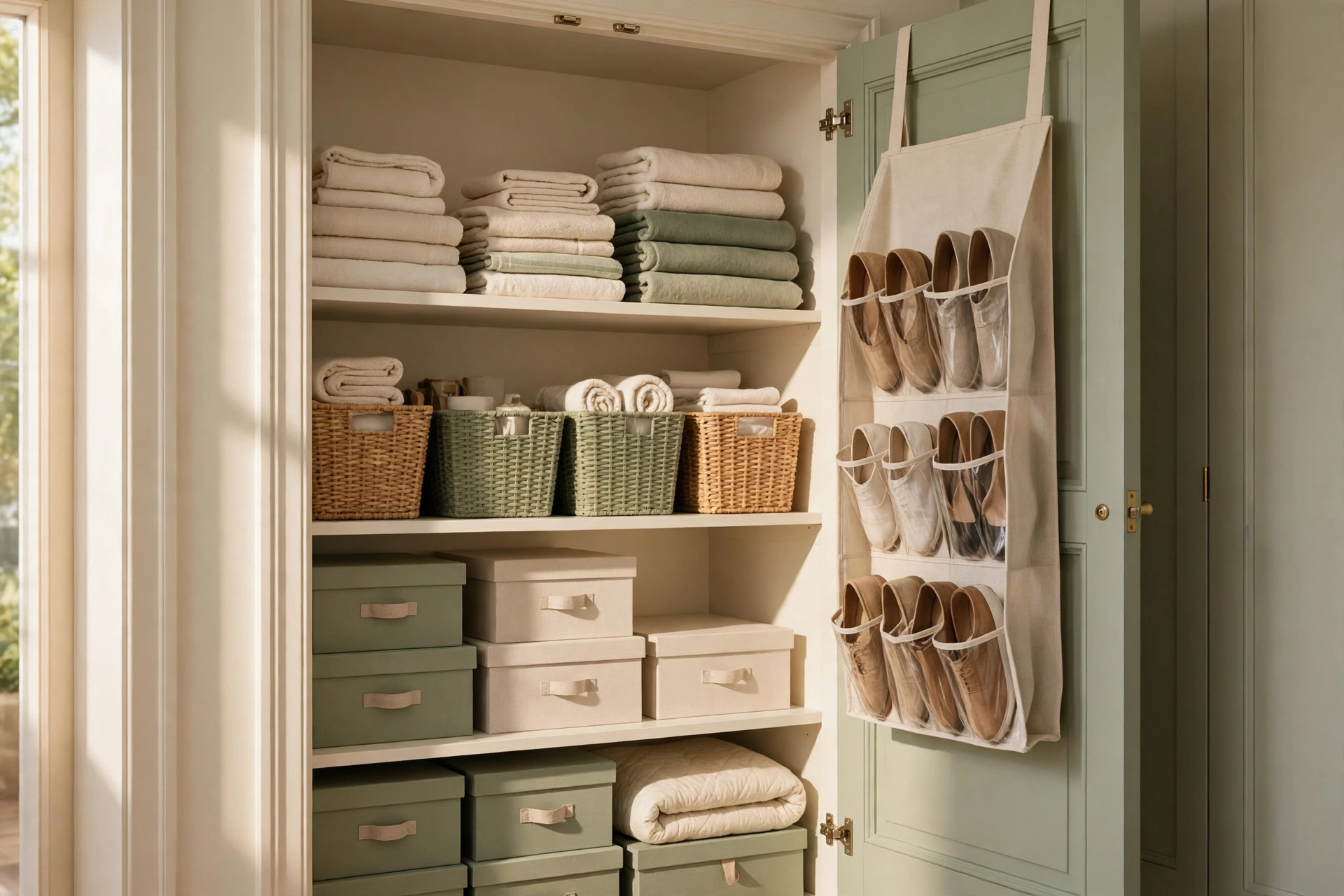
Over-the-door shoe organisers are not just for shoes. Hang one on a pantry door for snacks and packets, on a bedroom door for scarves and belts, or on a bathroom door for cleaning supplies and toiletries. Clear-pocket versions cost $8 to $12 and hold dozens of small items in space that was doing nothing. It is the highest storage-per-dollar buy on this whole list.
5. Claim the space under the bed
Under-bed storage is the biggest unused area in most bedrooms. Flat, lidded bins on wheels — or even zippered fabric bags — hold out-of-season clothes, spare bedding, shoes, or kids’ toys. A set of two under-bed bins costs about $20, and it frees up an entire closet shelf. Measure the clearance first: most beds have 6 to 8 inches of space, which fits a standard low-profile bin.
6. Fill the corner with a tension rod or a tall shelf
Corners are where storage goes to die, because standard furniture does not fit them. A tall, narrow corner shelf unit (often $20 or under) turns a dead corner into five shelves of storage for books, plants, or bathroom supplies. In a closet, a tension rod fitted across a corner creates a second hanging rail for short items like shirts and kids’ clothes.
7. Store things on the inside of cabinet doors
The inside of a cabinet door is free storage. Stick-on hooks and small wire racks hold measuring cups, pot lids, foil and cling film, cleaning sprays, and spice jars. Under the bathroom sink, a door-mounted rack keeps bottles upright and visible instead of lost at the back of the cabinet. A pack of adhesive hooks costs a few dollars and installs in minutes — use damage-free strips if you rent.
Storage That Hides in Plain Sight
8. Use baskets as furniture
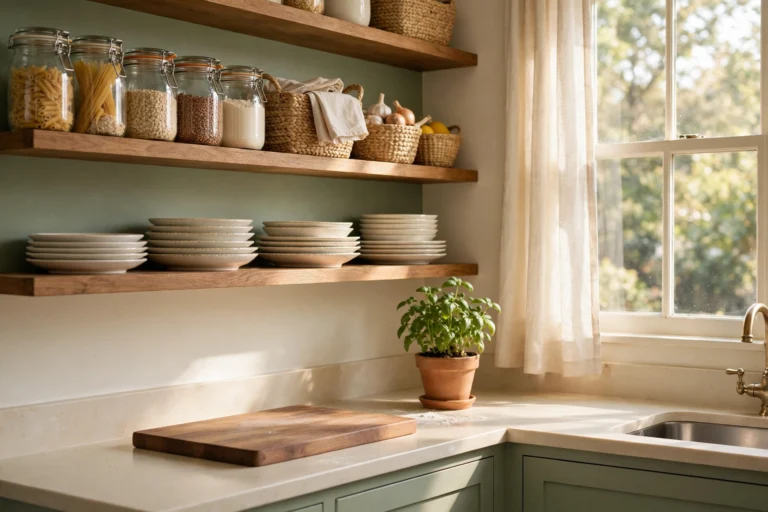
A good basket is storage and decor at the same time. A large basket by the sofa holds blankets and toys; a row of matching baskets on a shelf hides the clutter while looking tidy; a basket on top of a wardrobe holds the things you rarely need. Buy them at thrift stores or dollar stores for $5 to $10 each, and label the ones in shared spaces so the whole family knows where things live.
9. Go vertical inside closets and cabinets
Closets waste the top half of every shelf, just like kitchen cabinets do. Stackable shelf risers, hanging closet organisers with cubbies, and shelf dividers all cost $10 to $20 and roughly double the usable space. In the kitchen, a riser inside a cabinet doubles the room for mugs and plates — the same trick from our small kitchen organisation guide, and it works in every room of the house.
10. Use the back of the sofa and the side of the fridge
The side of the fridge holds a magnetic rack for spices, notes, and small jars — no drilling needed. The back of the sofa hides a slim console or a narrow shelf for books, remotes, and phone chargers. These are the spots people walk past every day without seeing them as storage, and they cost almost nothing to claim.
11. Roll, don’t fold, in drawers and bins
Rolling clothes instead of folding them flat saves about a third of the space in a drawer, and you can see everything at a glance instead of digging through a stack. The same trick works for towels, t-shirts, and kids’ clothes in storage bins. It costs nothing, takes no extra time once it becomes a habit, and it is the reason professional organisers roll everything.
12. Do a one-in, one-out rule to protect the space
Storage only works if the amount of stuff stays level. Every time something new comes into the house, something old leaves — donate it, sell it, or recycle it. This is the rule that keeps all eleven ideas above working for months instead of weeks. Without it, even the cleverest storage fills up again, and you are back where you started.
Frequently Asked Questions
What is the cheapest storage idea that actually works?
Over-the-door organisers and adhesive hooks. For under $15 total, you can add usable storage to three or four doors in the house. They need no tools, no drilling, and they work in rentals — which is why they are the first thing professional organisers reach for in small homes.
How do I store things in a small home without it looking cluttered?
Hide it or make it match. Use baskets and bins in one colour family so storage reads as decor, keep surfaces clear by giving every category a closed home, and use wall storage — shelves, pegboards, ledges — so the floor stays open. An open floor makes a room feel bigger, even when the walls are doing a lot of work.
What storage works best for renters?
Anything that does not drill holes: adhesive hooks and strips, tension rods, over-the-door organisers, freestanding shelves, under-bed bins, and baskets. All twelve ideas in this list work in a rental — skip only the floating shelves if your landlord does not allow drilling, and use a leaning ladder shelf instead.
Where should I start if my whole house feels full?
Start with one small, visible win: the entryway or the kitchen counter. Clear it completely, add one organiser (a key tray, a door rack), and keep it clear for a week. A single tidy spot proves the system works, and it motivates the next room far better than a whole-house overhaul ever will.
The Bottom Line
You do not need a bigger home — you need to use the home you have. A shelf above a door, an organiser on a pantry door, bins under the bed, and a one-in, one-out rule will change how a small home feels, and none of it costs more than $25. Pick one idea this weekend, do it in an afternoon, and enjoy the extra space on Monday.